Redesigning Nova Scotia's Workers' Compensation Website
WCB Nova Scotia's legacy website had grown to 3,000+ pages on an outdated platform. Workers, employers, and service providers couldn't find what they needed. The board made a full redesign a strategic priority. The challenge was leading a 10-person team across 20+ sprints while building agile and user-centred practice on the inside.
The Fragmentation Problem
Imagine trying to get information about your work injury claim and wading through 3,000+ pages of legacy content, some duplicated, some outdated, some impossible to find unless you already knew where to look. That was the reality for workers, employers, and service providers in Nova Scotia.
The costs showed up everywhere. Staff spent time helping people navigate the fragmentation instead of doing actual claims work. Content owners couldn't tell what was current. The platform itself was aging out of support.
But the real cost was to the people who needed help. An injured worker couldn't find clear information about their benefits. An employer couldn't figure out how to report a workplace injury. A health provider didn't know which forms to submit.
From Fragmentation to Unified Platform
Consolidated 3,000+ legacy pages into one user-centered platform
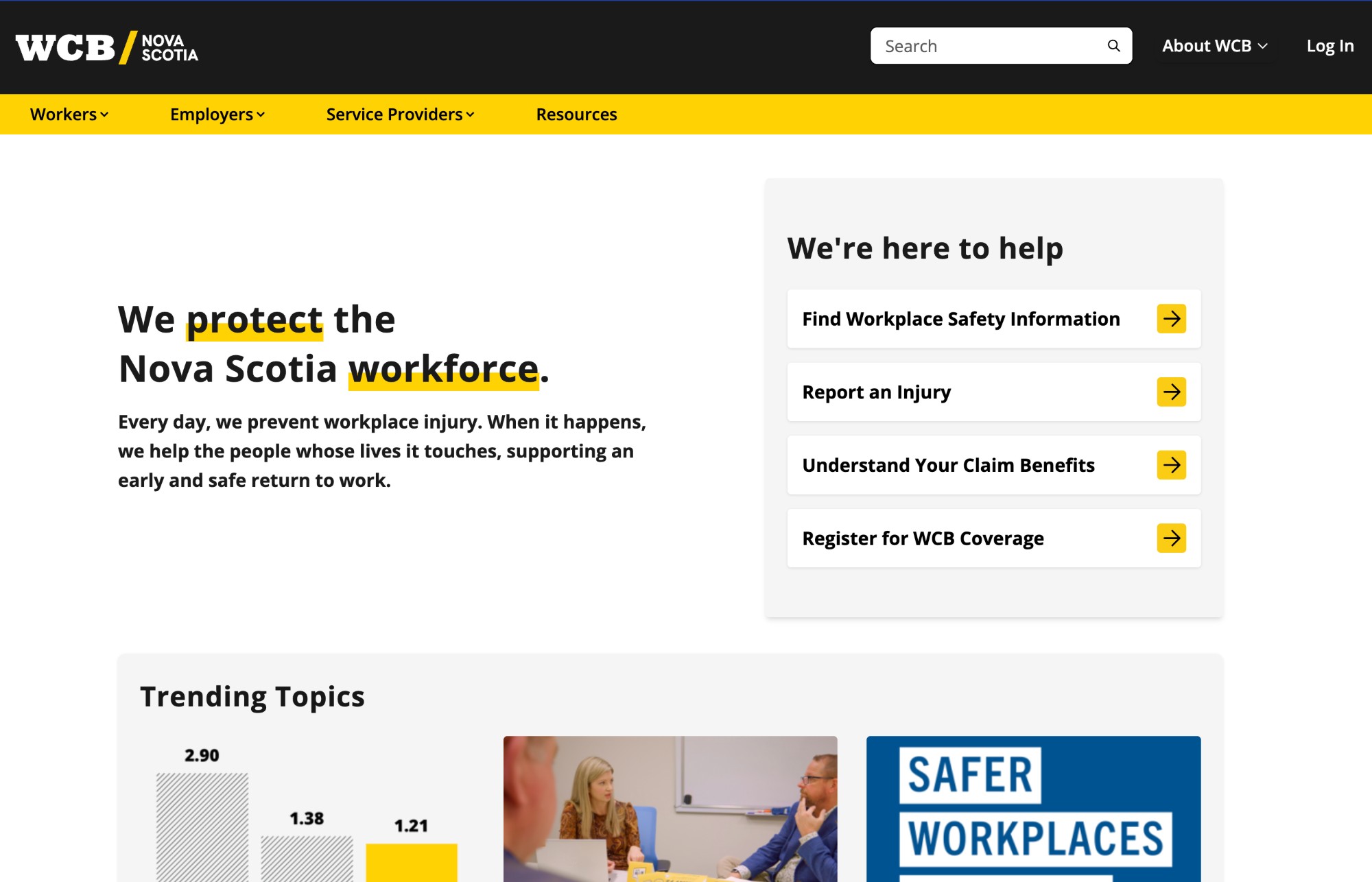
Homepage: Clear mission statement with quick action links
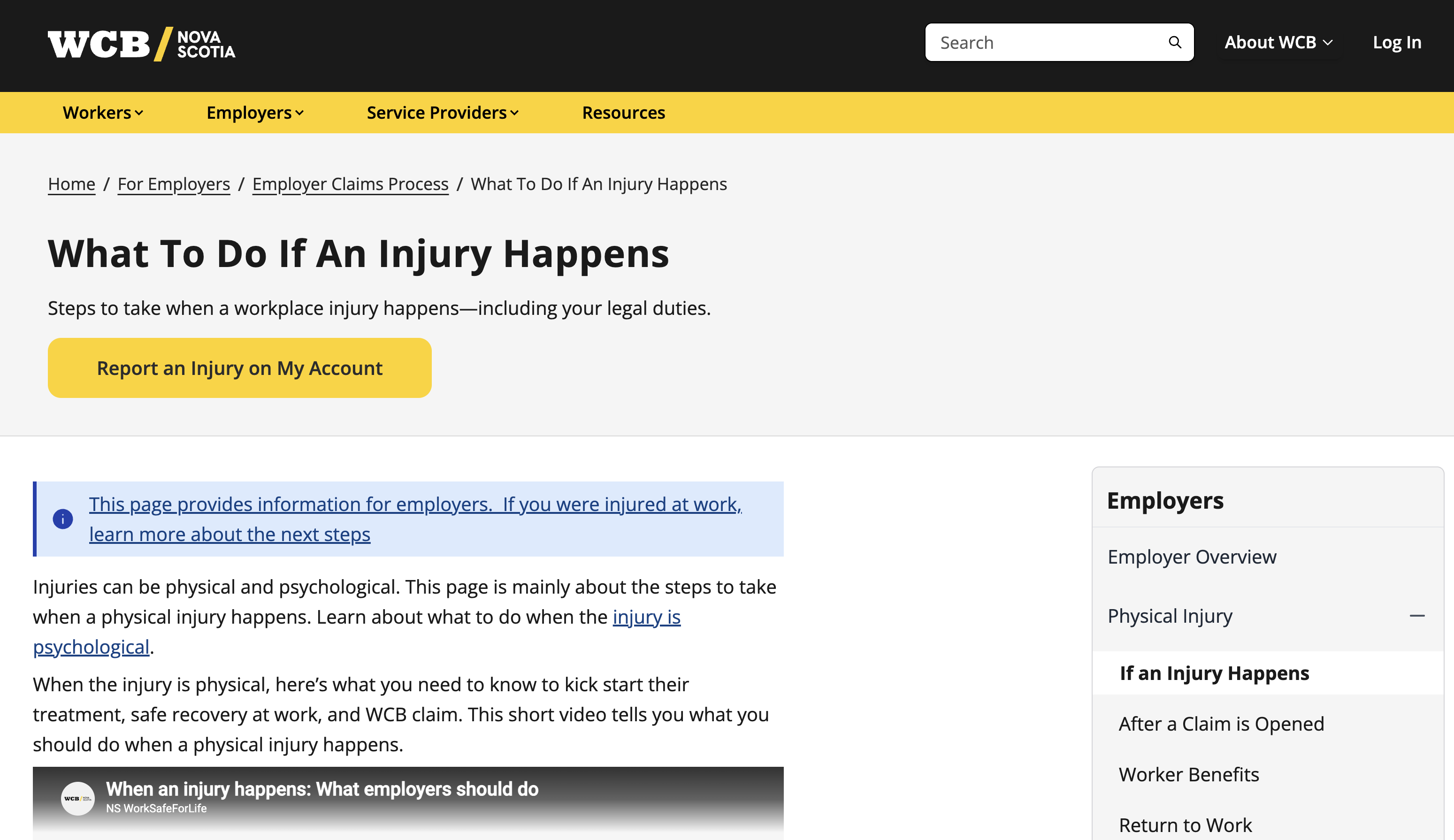
Employer Resource: Simplified guidance with clear next steps
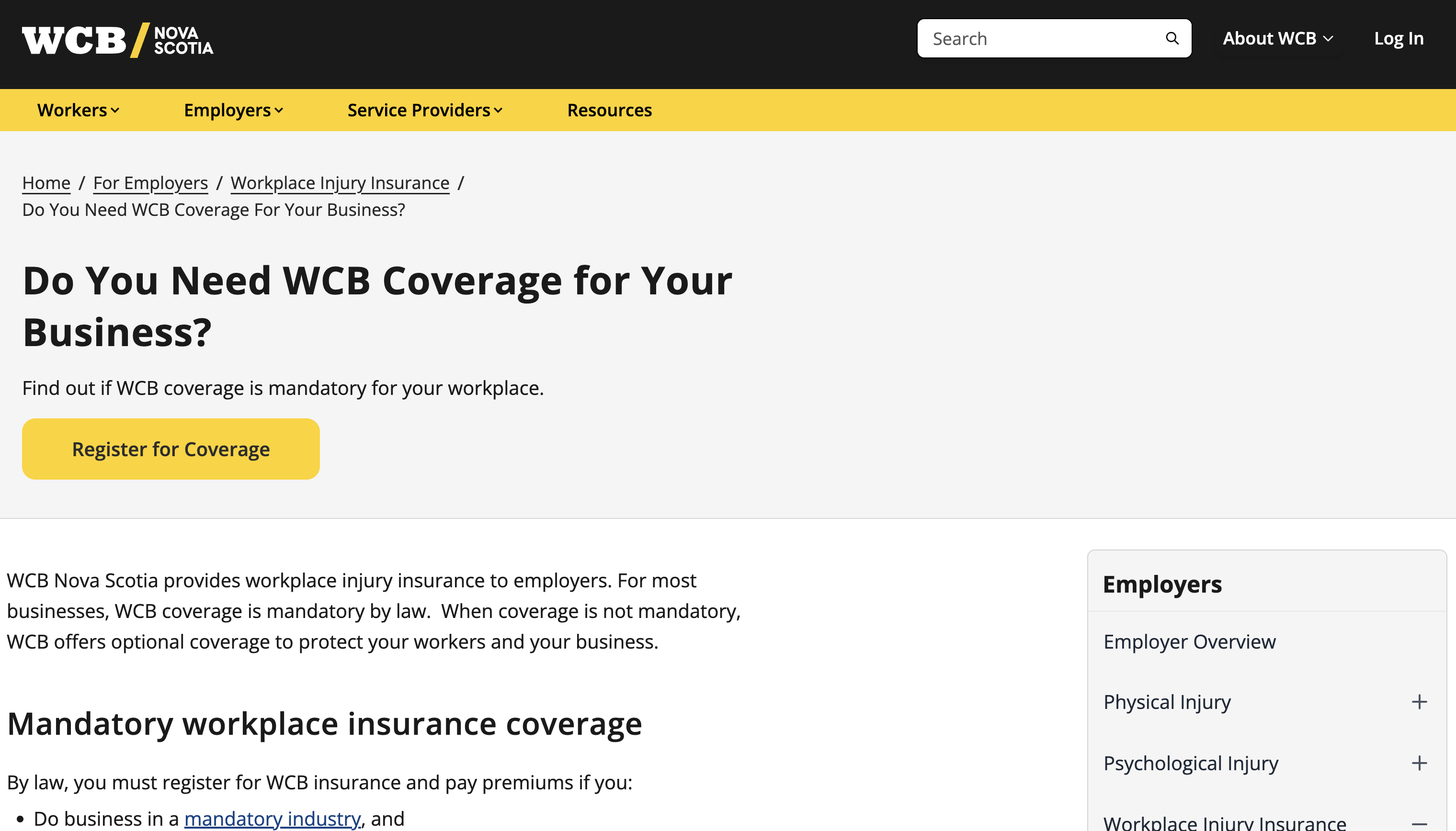
Coverage Information: Plain language explanation of requirements
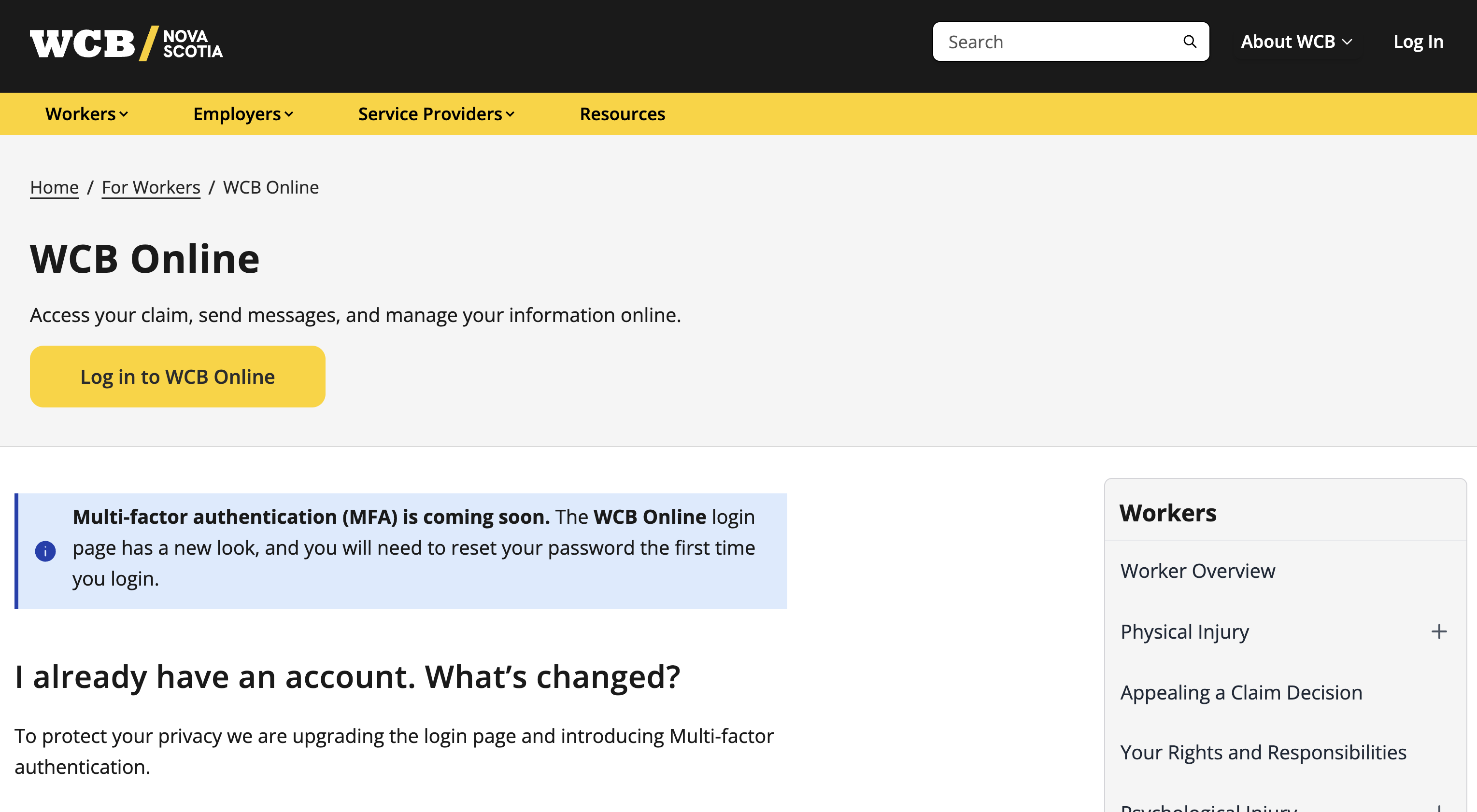
Worker Portal: Secure access to claims and account management
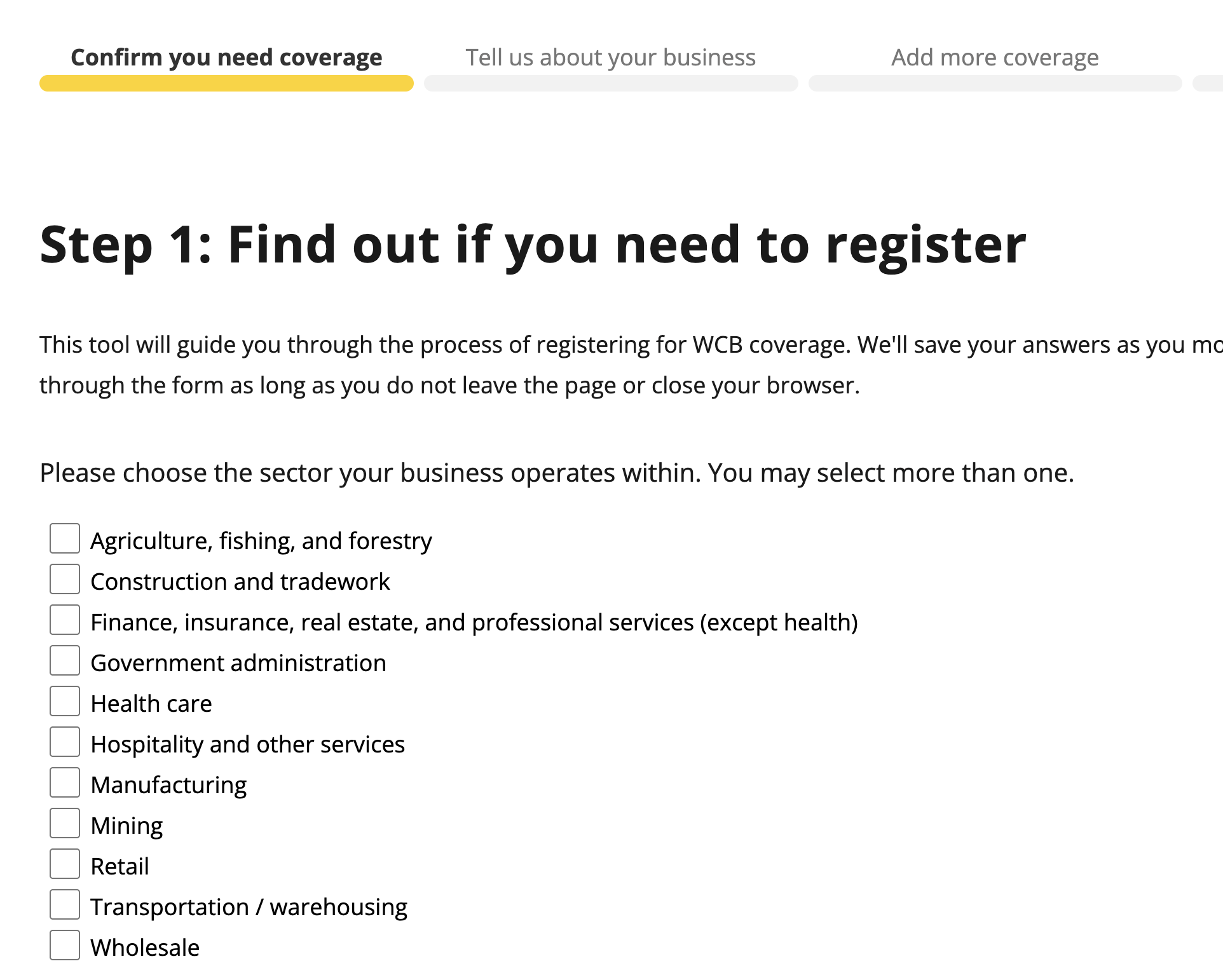
Registration Flow: Guided multi-step form with clear options
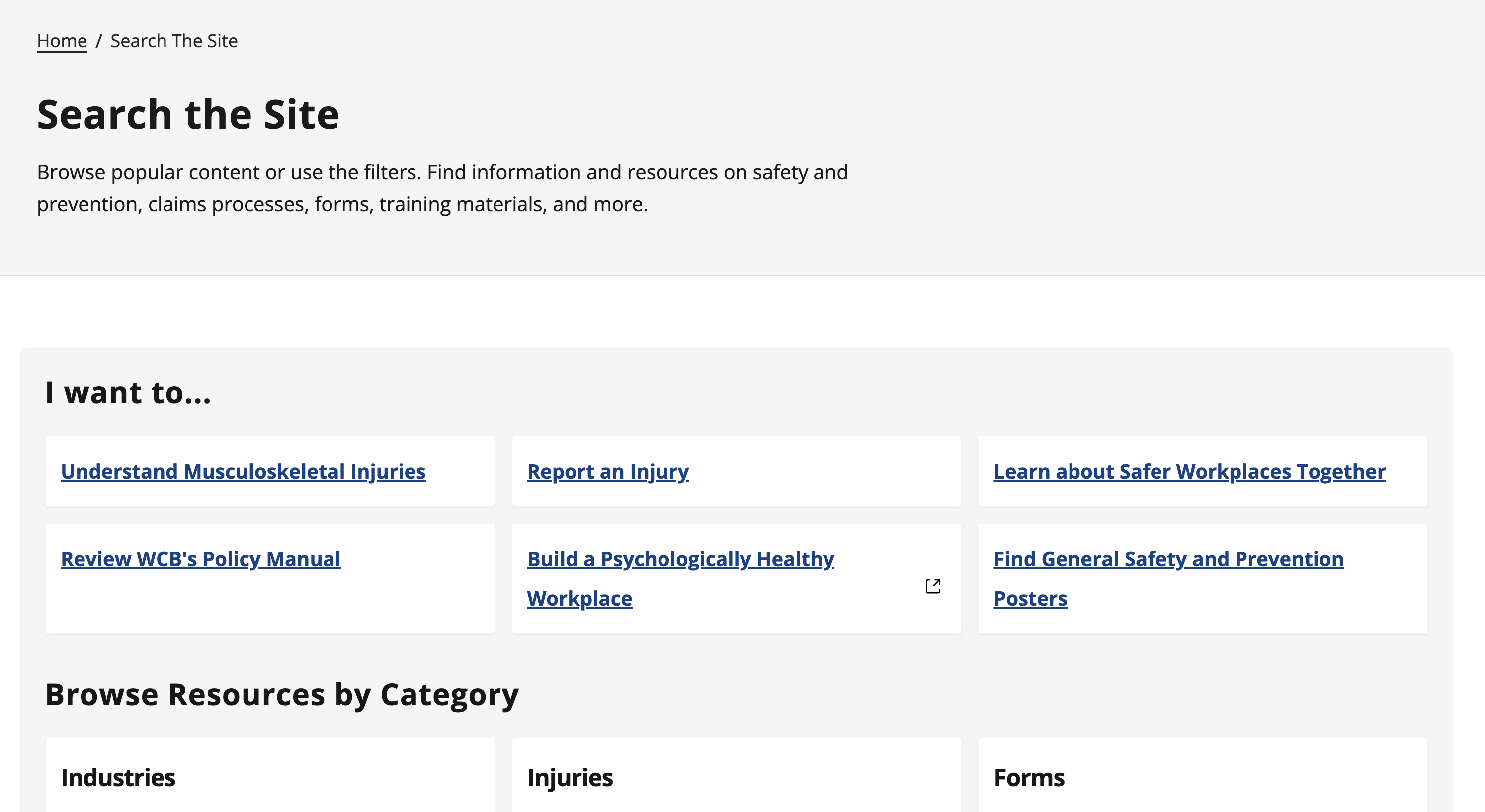
Resources Hub: Organized content by topic, audience, and industry
Understanding the Users
We started by talking to the three groups of people who depended on this system: workers, employers, and service providers like physiotherapists and occupational therapists. For workers, the WCB website was something they had to navigate at one of the hardest times of their lives. They were injured, possibly unable to work, and stressed about money. The website needed to be clear enough to understand in that state of mind.
For employers, especially small business owners, the website was confusing bureaucracy. They had questions about their obligations, their premiums, how to report a workplace injury safely. We ran card sorting exercises and concept testing to understand how they thought about the information.
Service providers had different needs entirely. They were submitting forms, checking on cases, coordinating with the board. We designed a system that worked for their workflow, not against it.
Agile Delivery: 20+ Sprints
A 10-person team delivering across 20+ sprints while building WCB internal capacity
Managing the Complexity
This wasn't a small redesign. Rather than migrating all 3,000+ legacy pages as-is, we systematically rewrote and restructured the content to be user-first, consolidating it down to roughly 100 pages: a one-stop-shop for injured workers and service providers. We decided what was still relevant, what should be archived, and what needed to be reframed entirely.
The project ran across 20+ sprints. I led agile delivery for a team of 10: 3 designers, 4 business analysts, and 3 developers. That meant running sprint planning, managing stakeholder expectations, and keeping the team moving forward without losing sight of quality. Alongside delivery, I put together short- and long-term project plans and a roadmap that tied user needs directly to the board's business objectives.
One of the biggest challenges was balancing speed with sustainability. We could have dictated the new structure from above. Instead, we insisted on involving WCB staff in designing it. We wanted them to understand the "why" behind every decision, so they could maintain and improve it independently.
Building Internal Capacity
While we were building the new website, we were also building the WCB team's capability in agile practices. This was new territory for many of them. Some staff came from a waterfall mindset where everything was planned in advance. The idea of shipping small pieces every sprint felt risky.
We paired our designers, business analysts, and developers with WCB staff, working side by side on actual tasks. It was learning by doing rather than classroom training. Over the course of 20+ sprints, the WCB team went from observers to active participants to independent decision makers.
The materials we left behind weren't just documentation. They were templates, frameworks, and decision guides the WCB team could use to continue building and improving the platform on their own.
Launch and Handoff
By the end of the engagement in December 2025, the ~100-page site was live as a single access point for workers and service providers, down from 3,000+ pages spread across the old platform.
More importantly, the WCB team could carry the agile and user-centred practice forward independently. New features, bug fixes, content updates. They could do it without needing external help. That was the real success: a measurable improvement in service, and a WCB team fluent in the way of working that produced it.
Workers in Nova Scotia could now find information about their claims in one place. Employers could report injuries through a clear, straightforward process. Service providers had tools that actually worked with their workflow.
Key Learnings
• Big projects need clear milestones, but small, visible progress keeps teams motivated and reduces risk.
• The people doing the work daily need to be involved in the decisions. They know things consultants never will.
• Pairing beats training every time. It's slower up front but faster overall because it creates real understanding.
• The project is only successful if the client can sustain it after you leave. Everything you do should be with that end state in mind.