Canada's Cybercrime and Fraud Reporting Tool
In 2023, 41,000 Canadians reported fraud and cybercrime cases with 554 million and 3 billion dollars in losses respectively. Yet the national reporting platform had never been tested with real, diverse users. It wasn't accessible. And it wasn't working for the people who needed it most.
Starting from Beta
The reporting tool existed but nobody really knew if it worked. It had never been tested with actual fraud victims. The RCMP team knew there were problems, but they didn't know where to start fixing them. That's where I came in.
My first step was simple: talk to the people actually using it. I conducted a national user research study with 75 participants across Canada. This wasn't a random sample. I wanted diversity. Fraud victims who had actually reported crimes. RCMP leadership who needed the data. Administrative staff who processed the reports. Elderly people who had been scammed. Young professionals. People in remote communities. People with disabilities.
We also brought in an external research partner to help find participants. Diversity in research was critical for this project, and the partner's network and recruitment expertise helped us reach groups the RCMP couldn't access directly. This became one of my key insights: identifying and closing research gaps matters as much as the research itself.
What I heard was consistent: the platform was hard to understand. The language was confusing. People didn't know what counted as a crime worth reporting.
The Research Process Chain
A blocked recruitment process halted the entire research initiative, preventing the team from testing and iterating
Research with Real Users
I didn't just ask people what was wrong. I watched them actually use the tool. I gave them scenarios like "You've noticed unauthorized transactions on your credit card. Report it." and let them work through the platform. Where did they get stuck? What did they misunderstand? Where did they give up?
The research revealed patterns I couldn't have predicted from sitting in a room. Elderly victims would get to the selection screen and freeze. The categories were too technical for them. Young people reported fraud cases that occurred on Facebook Marketplace but didn't know if this was the right place to report. The language needed additional review.
I also introduced a metrics-based approach to measuring success. I established a baseline usability score using the System Usability Scale (SUS). The platform scored 68 out of 100 at the start. That's in the "OK" range, but it needed to be excellent. The goal was 80 plus.
Usability Score Improvement (System Usability Scale)
SUS score progression from 68 (OK) to 82 (Excellent), a ~20% improvement through iterative refinement and accessibility testing
Redesigning for Real People
Based on the research, I worked with the RCMP team to redesign the interface and content. The crime categories got simpler and clearer. The instructions got less technical. We reduced jargon and added plain language explanations.
But the biggest work was accessibility. I brought in WCAG 2.1 AA compliance testing, something the platform had never had. This meant working with real people who used screen readers, keyboard navigation, and other assistive technologies. It meant testing with people who had cognitive disabilities to make sure the language was actually understandable, not just technically correct.
Each iteration, I ran the SUS test again with new users to measure progress. The score kept climbing. 72. 76. 79. 82. The platform had moved from OK to excellent through this repeated testing and refinement.
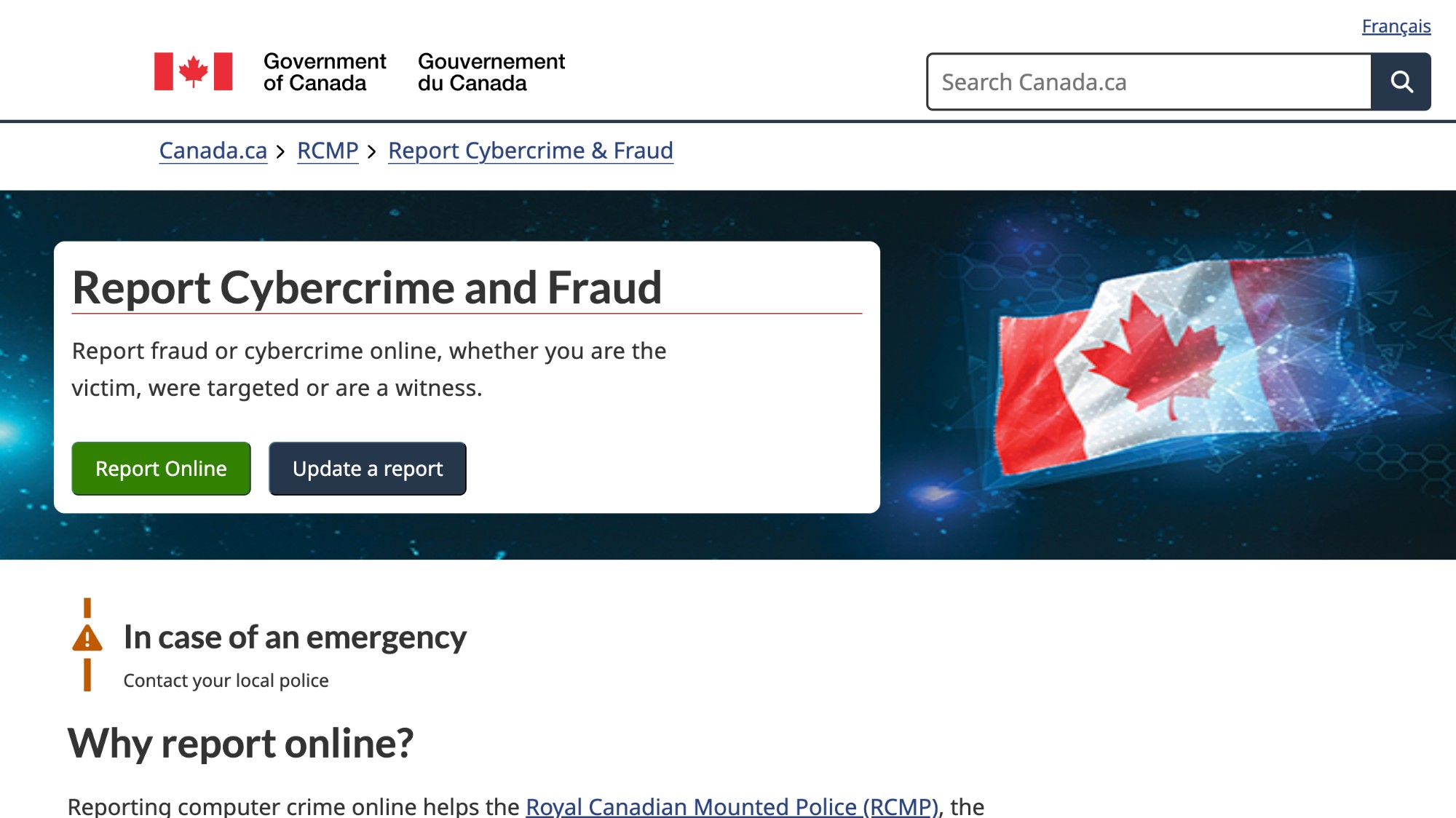
Homepage: Clear call-to-action and simple explanation
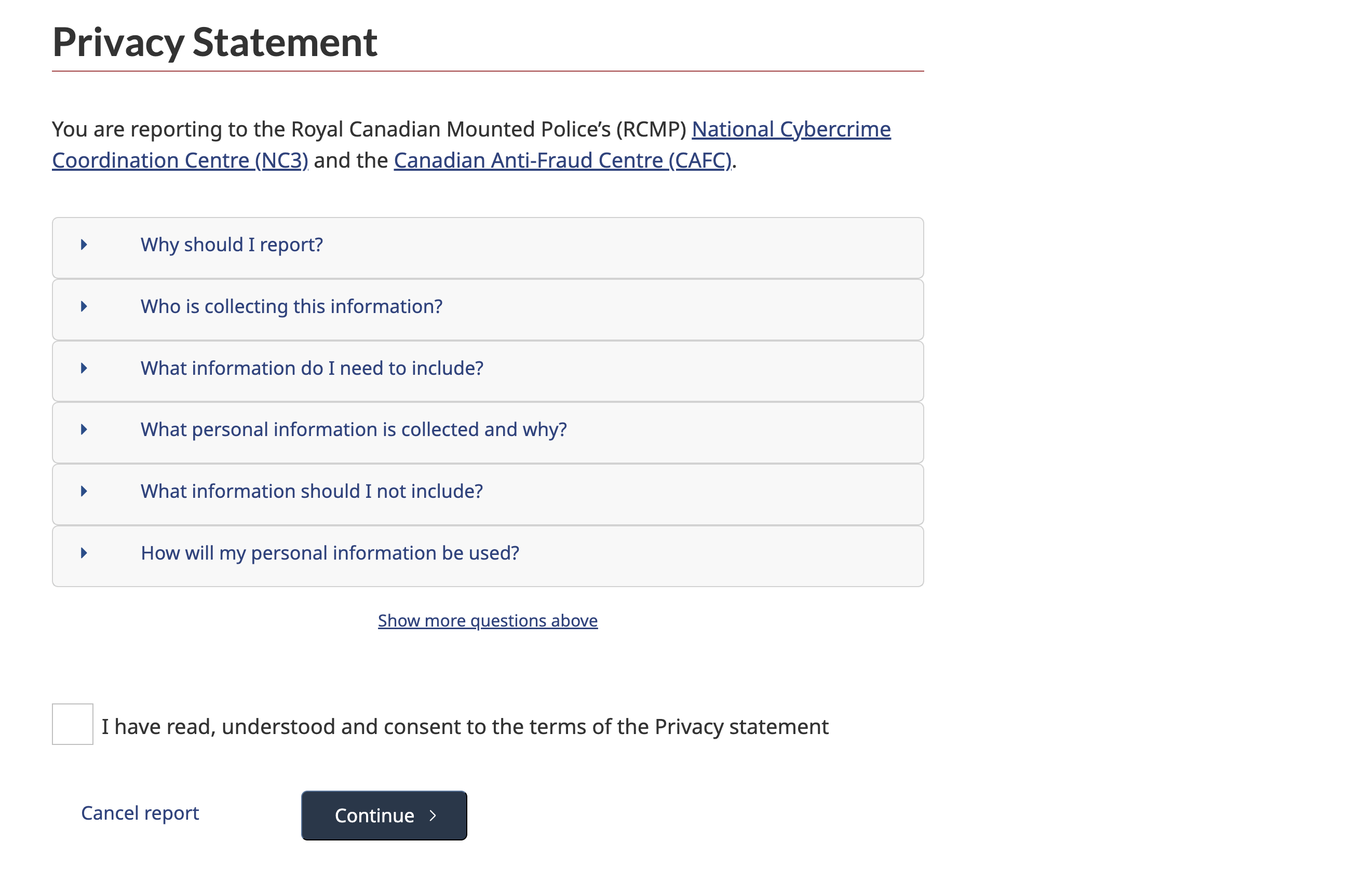
Category Selection: Simplified options focused on user role
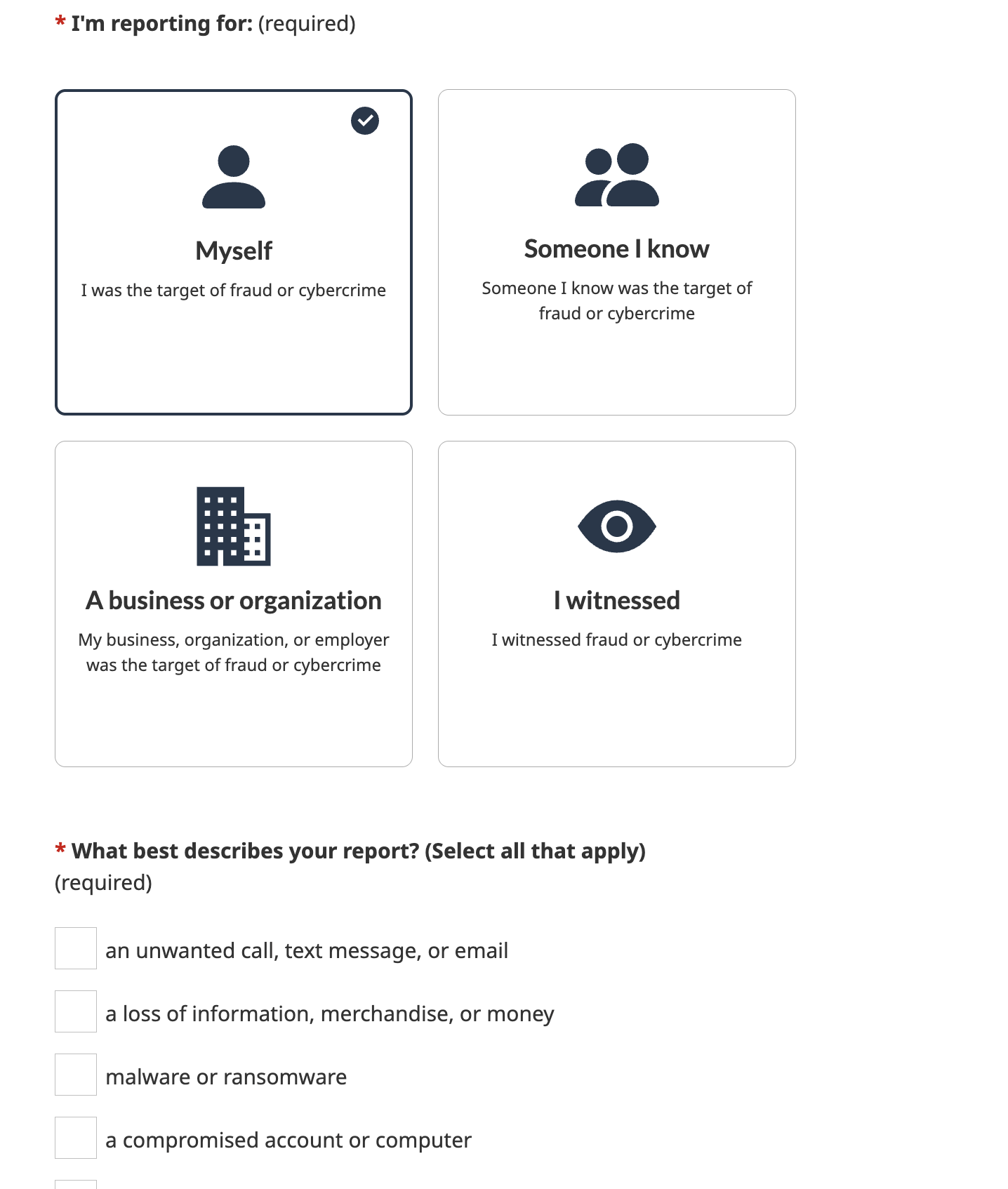
Privacy Statement: Clear explanation of data use
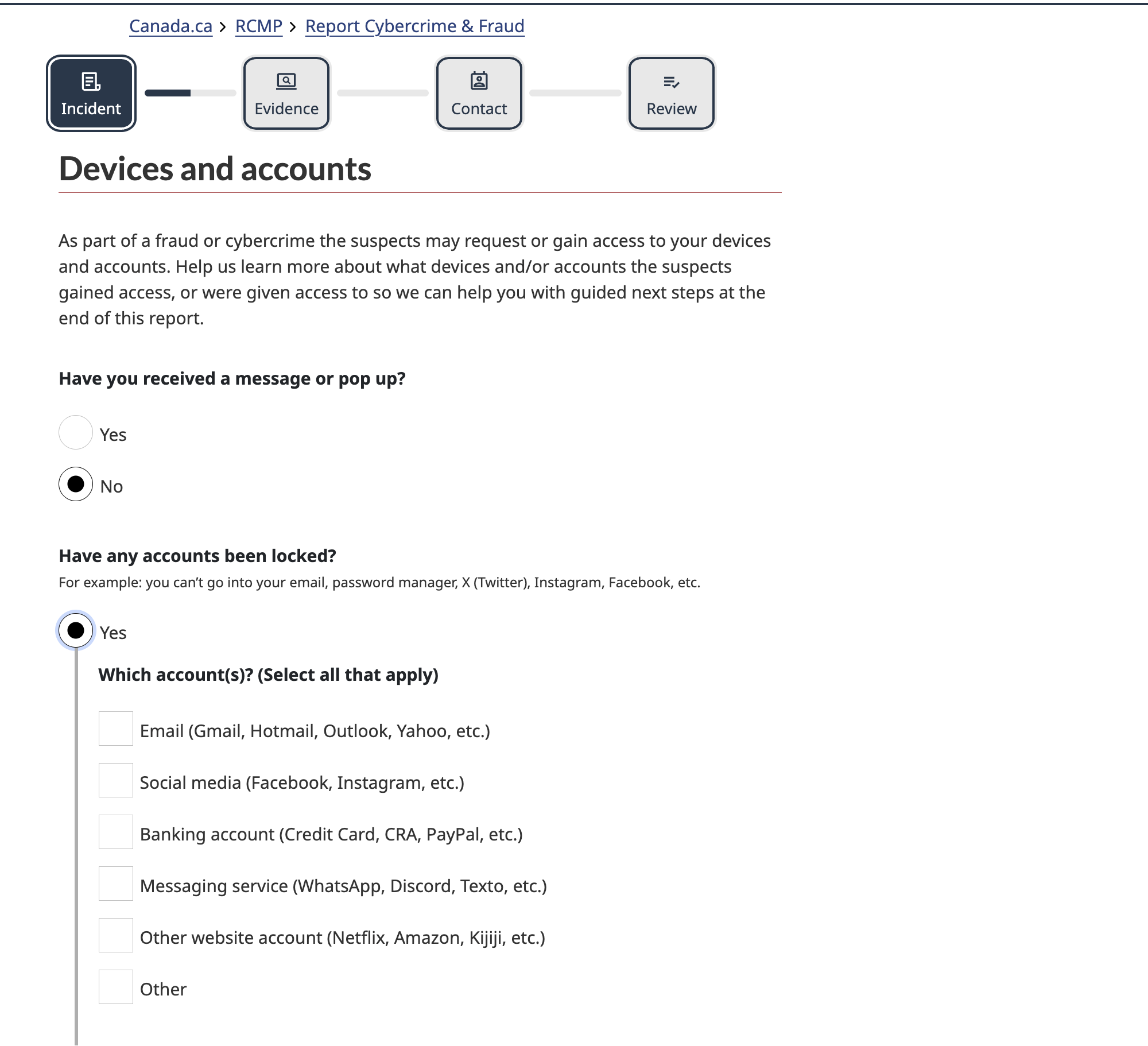
Form: Guided experience with helpful labels and explanations
Building Lasting Capacity
Before the project concluded, I ran workshops with the RCMP team. I cared less about handing over a finished product than about transferring a way of thinking. I taught them how to run usability tests, how to interpret metrics, how to think about accessibility from day one. The workshop materials I left behind (testing templates, SUS guides, and accessibility checklists) made it possible for the team to continue testing and refining on their own.
What Happened Next
The platform launched in October 2025 and continues to serve Canadians reporting fraud and cybercrime. The research, testing, and accessibility work I led shaped how the platform was built, and those principles stayed with the RCMP team after the project concluded.
The work has become a case study within the RCMP on how to approach public-facing design. Teams across the organization have since adopted similar research methods and accessibility practices for their own projects. The platform is live at reportcyberandfraud.canada.ca.
Key Learnings
• Metrics matter. A SUS score gave us a common language for progress and made the work visible to skeptics.
• Diversity in research isn't nice to have. It's essential. Testing with only one type of user blinds you to entire categories of problems.
• Accessibility isn't a feature you add at the end. It's a design principle that changes how you approach everything.
• The people doing the work need to understand why you made the changes, or they won't be able to sustain them.